
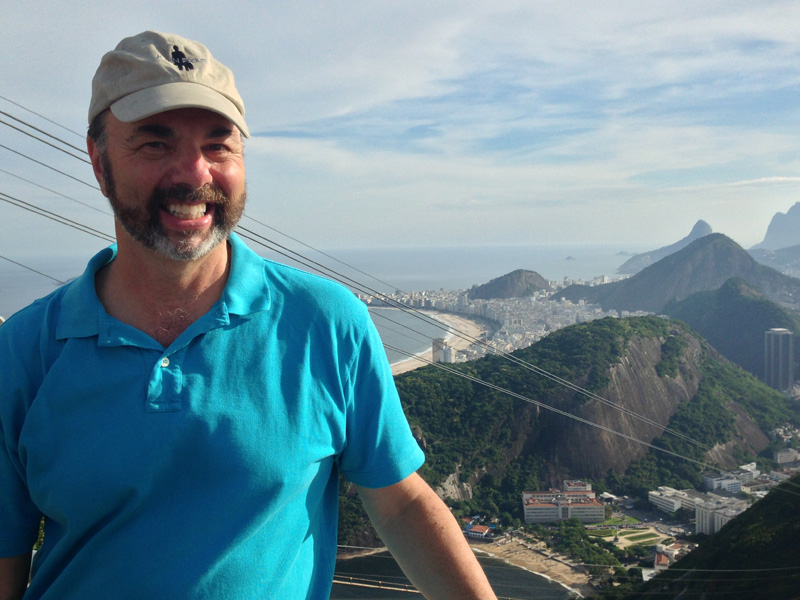
 Ken Doctor’s work centers on the disruption and transformation of the news business in the digital age. For 15 years, he has covered both the great successes of digital transformation and democracy-crippling losses of local news across the Western World. He speaks, writes and consults with companies and associations on four continents, and has become a go-to source, much quoted in media across the globe, on the landscape and the road ahead.
He has broken stories on the financialization and consolidation of the North American daily press, and warned against the increasing domination of the local press by a handful of short-term-oriented financial players.
As we approach fall, 2020, Ken is keenly focused on Lookout Local. His for-profit, public benefit company, will launch its first-of-a-kind local news model soon. The goal: change the conversation about how our times and digital technology now make possible the repopulation of news deserts in the 2020s.
Newsonomics is the word he coined to describe this new discipline of understanding the money flow within the print and broadcast transition to digital. Crossover Newsonomics describes the age that most media owners now find themselves in the midst of.
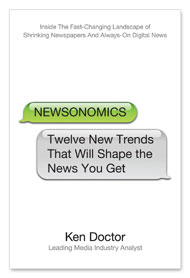
Ken writes the popular “Newsonomics” column for the Nieman Journalism Lab. His work, is collected, archived and freely available, at Newsonomics.com. That column — in real time — follows his 2010 book, “Newsonomics: Twelve New Trends That Will Shape the News You Get,” which has been translated into Mandarin Chinese, Korean, Portuguese and Russian.
As a speaker and consultant, he works with media globally, advising on new sustainable — and growing — business models of contemporary journalism. In that work, he focuses on the many issues and opportunities offered by the transformation of news and consumer media. Among the many topics covered – and tailored – are the trends driving business change, with data-driven reader revenue strategies paramount. Increasingly, he focuses on the central importance of analytics and use of “Little Data” in driving media companies forward.
A veteran of the legacy and digital media industry, he combines deep experience as an executive in strategy, revenue models and in managing and transitioning newsrooms. His experience includes 21 years with Knight Ridder, as well as time spent in the worlds of licensing, corporate development, business development and syndication.
His major non-work commitment is to education and to improving life in Santa Cruz County.
Ken has served as both past president of the UC Santa Cruz Foundation and the UCSC Alumni Council, and continues as a Foundation trustee. A graduate of UCSC, and a 22-year-long volunteer for UCSC, he has focused strongly on undergraduate education, access and preparing the whole student for life and work in the digital age. He now actively supports the advancement of ground-breaking UCSC’s Genomics Institute. Ken also credits his early journalism education at the University of Oregon, where he gained a Master’s in journalism, which launched his career.
On Twitter, he’s found @kdoctor
On Facebook, as https://www.facebook.com/kendoctor
On LinkedIn, as http://www.linkedin.com/in/newsonomics